
Buy near the sea on the Costa Brava-Baix Empordà.
The market in 2026
“The property market in the Baix Empordà has never been homogeneous, but in 2026 the differences are more pronounced and better documented than ever. Talking about average prices by municipality is no longer useful. Within the same area you can find apartments at €2,000/m² and villas above €8,000/m². They do not compete with each other. They do not share the same buyer. They do not evolve in the same way.
Today, the variable that truly defines the market is just one: proximity to the sea.
This article is an orientative guide to help understand which coastal areas of the Baix Empordà best suit each buyer profile, with price data cross‑checked from several sources and the key market insights that matter in 2026.”

Which areas did we analyze?
“We are going to analyse eight coastal areas, each with its own distinct identity.
Sant Feliu de Guíxols (seaside and town center), S'Agaró / Platja d'Aro, Sant Antoni de Calonge, Palamós, Palafrugell coast (Calella de Palafrugell, Llafranc, and Tamariu), Begur (coves and town center), Platja de Pals, and L'Estartit.
The inland neighbourhoods of each municipality, the urban centres located away from the coast, and the purely local residential market are deliberately excluded. Not because they are smaller or less relevant markets, but because they follow a completely different logic, and mixing them would distort the analysis.
The buyer who defines this market
Before talking about figures, it is important to understand who is actually buying in these areas. The buyer profile is highly specific, and that largely explains why this market behaves differently from the rest of Spain.
Demand is driven predominantly by second-home buyers, with a significant and steadily growing international component: French and Scandinavian buyers in Begur and coastal Palafrugell, Dutch and Belgian buyers in Palamós and Sant Feliu, as well as Catalan and Spanish families looking either for a definitive summer home or for a property capable of generating rental income during the months when they are not using it themselves.
Remote working has structurally changed usage patterns. What used to mean “July and August” has evolved into stays lasting four, five or even six months. This fundamentally changes the cost-benefit analysis of buying versus renting, pushing many buyers towards ownership who, in the past, would probably have continued renting indefinitely.
There is also a third decisive factor: lower dependence on mortgage financing. In the upper segment of this market, a significant proportion of transactions are completed either entirely in cash or with only partial financing. That largely explains why the Baix Empordà coast has resisted rising borrowing costs far better than many other property markets over the past three years.
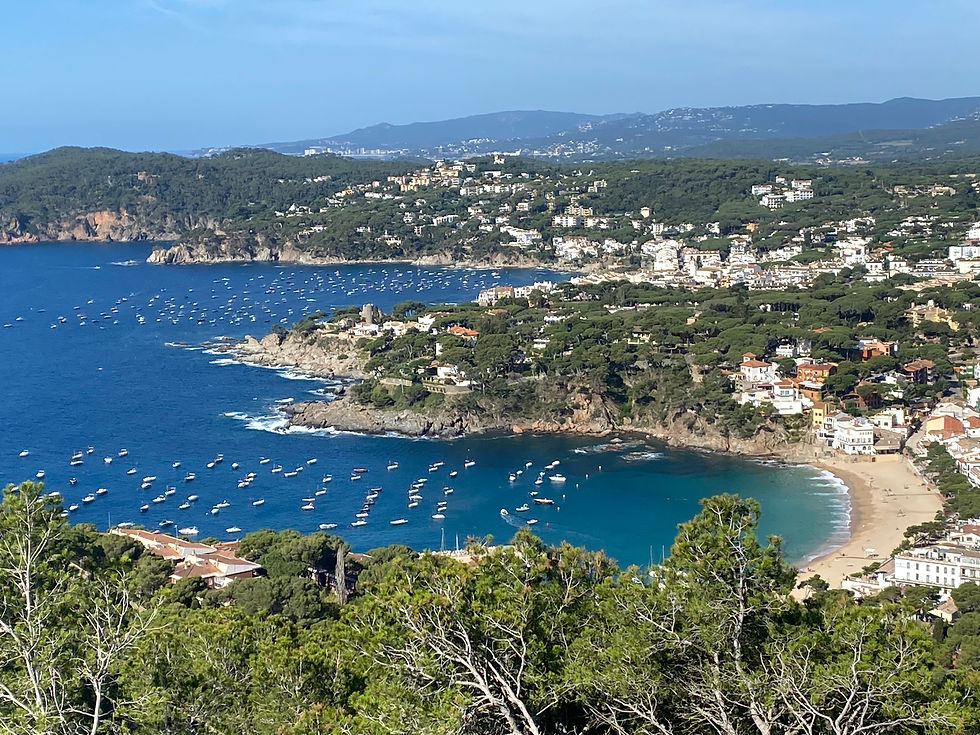
Prices in 2026: three speeds
Prime areas — Begur, Calella de Palafrugell / Llafranc / Tamariu y S'Agaró
These are the scarcest markets, the most internationally sought-after and the most resistant to any significant correction.
The municipal average in Begur currently stands at around €4,500–4,600/m², with annual growth of approximately 6.5–7% over the past year. However, that average also includes areas further from the coastline. In the coves —Sa Riera, Sa Tuna, Aiguablava, Fornells and Cap Sa Sal— prices are consistently higher, while truly exceptional frontline properties sit well beyond any municipal average.
Palafrugell, as a municipality, records an average of around €3,000–3,100/m², although this figure is heavily pulled down by the urban centre itself, where prices are closer to €2,000/m². In Calella de Palafrugell, Llafranc and Tamariu, the real market benchmark for well-located coastal property ranges between €3,100 and €4,500/m², with exceptional homes regularly exceeding that range.
Llafranc has spent years attracting highly discerning buyers —Catalan families, international investors and returning generations with long-standing ties to the area— while maintaining an extremely limited and highly exclusive supply.
S’Agaró represents a category of its own: a historic private estate with distinctive architecture and direct access to Sant Pol beach. The market here behaves almost like a private club —supply is exceptionally scarce, and when properties do appear, prices reflect that rarity.
Annual price growth across these areas currently ranges between 5% and 8%.
Consolidated areas — Sant Feliu de Guíxols (costa), Sant Antoni de Calonge y Palamós
Here, the market offers greater liquidity, a higher volume of transactions and a slightly more diverse buyer profile.
The municipal average in Sant Feliu de Guíxols currently stands at around €3,200–3,270/m², although internal differences are considerable. Areas such as Sant Pol and Volta de l’Ametller can exceed €3,800/m², while inland neighbourhoods remain below €2,000/m². The “coastal Sant Feliu” analysed here competes directly with Platja d’Aro and Palamós, rather than with the municipality’s more conventional residential market.
Sant Antoni de Calonge records average prices of around €3,300–3,400/m², positioning itself as one of the most dynamic markets along the central stretch of the Costa Brava. Its long sandy beach, easy accessibility and recent wave of new-build developments —with several schemes recently completed or scheduled for delivery during 2026— make it attractive both for private use and for investment aimed at the holiday rental market.
Palamós has experienced one of the sharpest increases in the region over the past year, with municipal averages currently around €3,100–3,200/m² and annual growth approaching 11%. Within the municipality, La Fosca and Cala Margarida remain the most sought-after areas, while neighbourhoods further from the coastline sit significantly below those figures. In Palamós, the price difference between frontline property and homes located just ten minutes inland can easily reach 40–50% per square metre.
Annual price growth across these areas currently ranges between 4% and 6%.

Areas with Greater Growth Potential— Platja de Pals y L'Estartit
These are currently the two most accessible coastal markets in the Baix Empordà for buyers who want to remain close to the sea without reaching the price levels seen in Begur or the “golden triangle” of coastal Palafrugell.
Torroella de Montgrí —which includes L’Estartit— records municipal averages of around €2,500–2,600/m², with moderate annual growth of approximately 4–5%. L’Estartit offers something that is extremely difficult to replicate: the Illes Medes directly offshore, a protected bay and a natural environment with very limited scope for future development. The market has not yet fully absorbed that value into pricing, which makes it one of the areas with the strongest medium-term appreciation potential in the entire region.
Platja de Pals offers wide sandy beaches, pine forests and a quieter atmosphere, with prices for well-located coastal property generally ranging between €2,500 and €3,500/m². Growth has been more moderate than in the prime areas, although the upward trend is becoming increasingly clear as available stock in Begur and Calella continues to tighten.
Why Does the Coastal Market Continue to Rise?
There are four structural factors behind this trend, and none of them currently show any sign of reversing.
Scarcity of New Development Land
Along the frontline areas of the Costa Brava in the Baix Empordà, there is virtually no buildable land remaining. Coastal protection regulations, protected natural areas and strict municipal planning policies have effectively locked down further development along much of the coastline.
What exists today is largely all that will exist in the future, and properties move slowly from one private owner to another in an increasingly supply-constrained market.
Sustained International Demand
International demand may not be massive in terms of volume, but it is constant and highly solvent. Many northern European buyers have spent years renting in the area before eventually deciding to purchase.
In many ways, the high-end holiday rental market along this stretch of coastline has acted as a showcase, gradually converting long-term visitors into property owners.
Changing Patterns of Use
The normalisation of remote working has fundamentally changed how second homes are used. Many families now spend three, four or even six months a year in their coastal property.
That shift completely changes the cost-benefit analysis between buying and renting, pushing many buyers towards ownership who, only a few years ago, would probably have continued renting indefinitely.

Safe-Haven Asset
In an environment marked by global uncertainty, well-located Mediterranean property continues to behave as a capital-preservation asset, particularly for medium- to high-net-worth buyers seeking diversification.
Outlook for 2026–2027
The most likely scenario across the coastal areas analysed points towards moderate but sustained price growth: around 4–6% annually in the more established markets, and potentially higher in prime areas where supply is especially limited.
At present, there are no clear signs of a market correction.
Buyers are becoming more selective and taking slightly longer to make decisions —they have access to more information and compare more carefully— but once they decide, they tend to do so with conviction.
The greatest risk does not currently lie in demand, but in regulation. Any significant changes affecting tourist rental licences, usage regulations or taxation on second homes could alter the investment rationale for some buyers. So far, however, that risk has not materially affected the Baix Empordà market.
The One Idea That Explains Everything
In the Baix Empordà, you are not really buying into a municipality. You are buying a distance from the sea.
That distance —measured in metres from the beach or the nearest cove— has become the single most decisive factor influencing price, liquidity and the future performance of property across the region.
Understanding that before searching, before negotiating and before making a decision is often the difference between buying well and simply overpaying within the same market.
Methodological Note
The prices referenced in this article are indicative only and are based on the comparison of several property market analysis sources updated at the beginning of 2026. As each source applies different weighting methods —including listing portals, automated valuations and transaction data— figures for the same municipality may vary between platforms by as much as 10–20%.
The values used here reflect an average across those sources in order to provide the most realistic market reference possible.
It should also be noted that the exceptional coastal segment —frontline cove properties, distinctive architecture and unique plots— operates according to its own logic. In these areas, prices can exceed €10,000/m², while the opacity of the market means many transactions are never reflected in public data.
This article is intended as an informative guide to help buyers understand which coastal areas may best suit different profiles and objectives. It should not be considered a formal valuation report.
If you own a property on the Costa Brava or in the Baix Empordà, it may well be worth more than you think.
The market has changed. Speak to us and we will tell you exactly how much —with no obligation.


Comments